Freestanding vs. Alcove vs. Deck Mount vs. Japanese Soaking Tubs: Which Is Right For Your Bathroom Remodel?
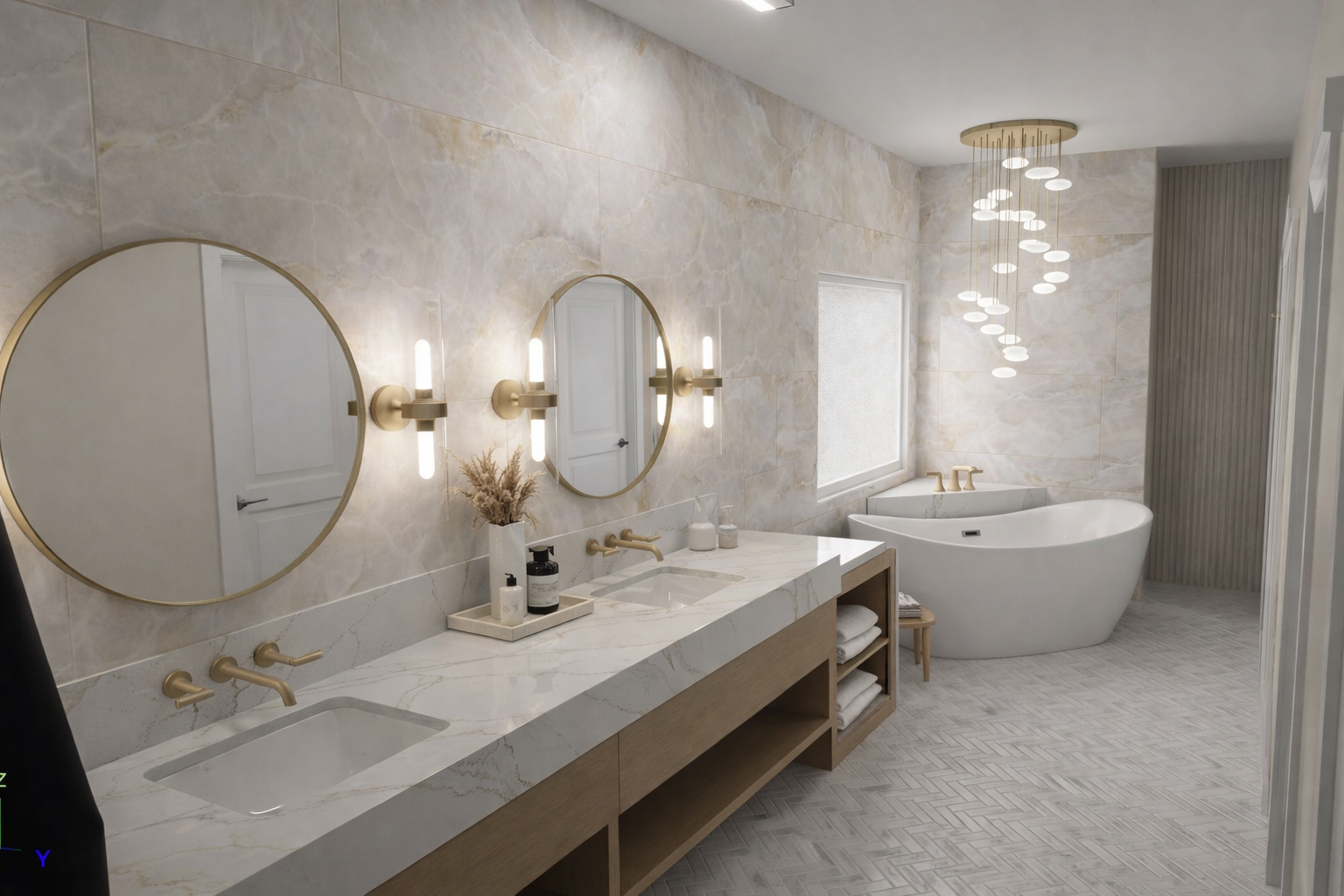
You've been saving bathroom inspiration photos for months. And in almost every one of them — that gorgeous freestanding tub sitting in the middle of the room like a piece of sculpture.
It's easy to fall in love with.
But before you commit to a freestanding tub — or any tub — there are decisions being made right now, behind your walls and under your floors, that will determine whether your dream bathroom is even possible.
Plumbing rough-in locations. Square footage. Ceiling height. Traffic flow. These are the details that separate a bathroom that looks exactly like your inspiration photo from one that almost does.
This guide walks you through all four tub types for primary bathroom remodels — freestanding, alcove, deck mount, and Japanese soaking — so you can make the right choice for your specific space before a single tile is ordered.
The Four Main Tub Types
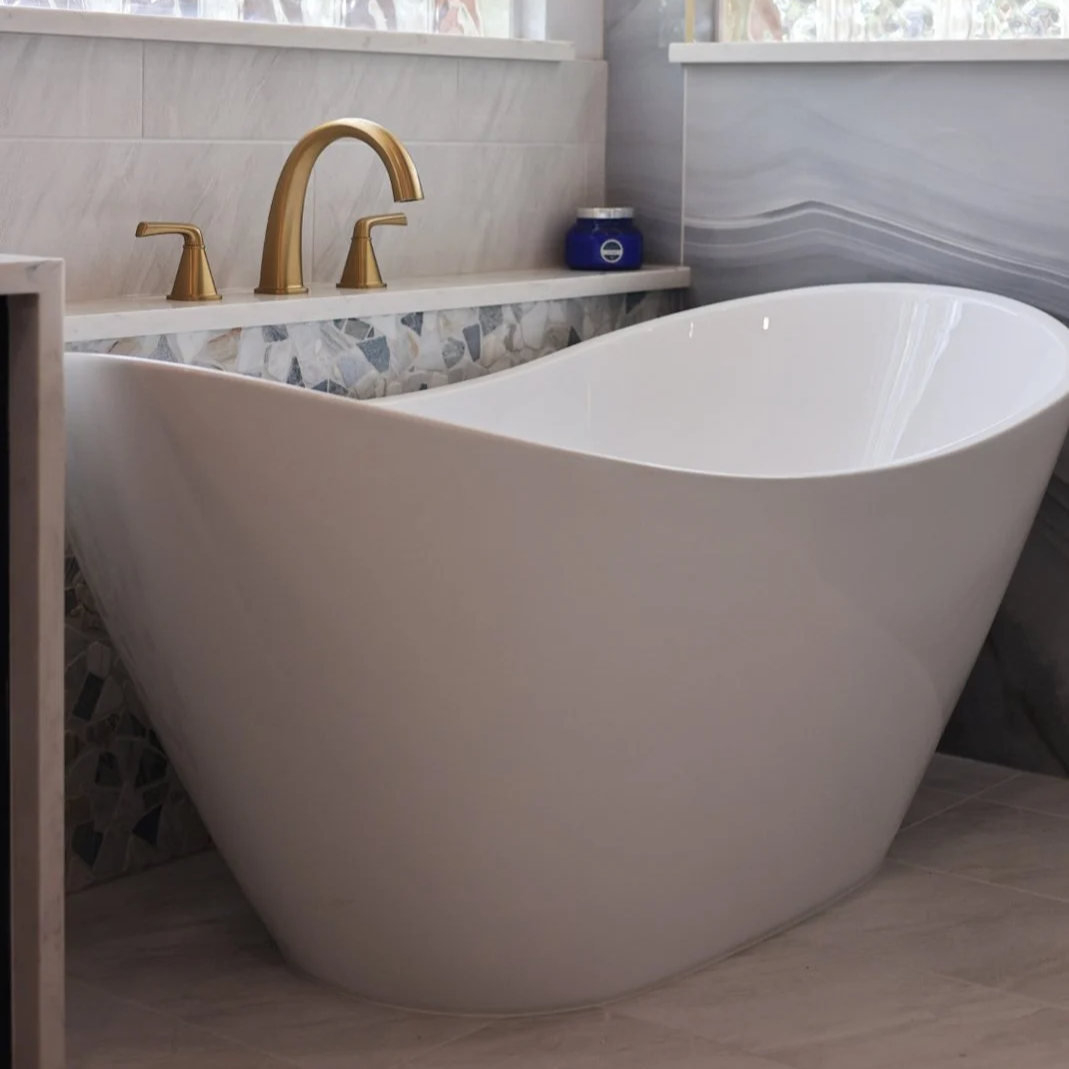
1. The Freestanding Tub — The Showstopper
There's a reason the freestanding tub dominates every bathroom mood board. It commands attention, creates an instant focal point, and signals that this bathroom was designed with intention.
But it comes with real considerations that your contractor may not bring up until you're already mid-demo.
The Pros:
Maximum visual impact. A freestanding tub is the jewelry of the bathroom. When the space supports it, nothing else comes close in terms of design presence.
Flexible placement. Unlike alcove tubs, a freestanding tub isn't locked to three walls. It can float in the center of the room, nestle in a corner, or sit in front of a window — as long as your plumbing can reach it.
Faucet options. Contrary to popular belief, freestanding tubs don't require a floor-mounted tub filler (though they can use one). Wall-mount and deck-mount faucets are both viable options depending on your layout — more on this below.
The Cons:
Space requirements are non-negotiable. A freestanding tub needs a minimum of 6 inches of clearance on all sides — not just for looks, but for cleaning and maintenance access. In a smaller bathroom, that clearance requirement can eat up the entire floor plan.
Cleaning is a real consideration. That beautiful gap between the tub and the floor? You have to clean it. Every time. If low-maintenance is a priority, factor this in.
Filling takes longer. Most freestanding tubs have a larger water volume than alcove tubs. If your water heater isn't sized appropriately, you may be topping off with cold water before the tub is full.
Getting in and out. This is rarely discussed in design conversations, but it matters — especially for long-term livability. Freestanding tubs have higher sides and no grab bar options. If aging in place is a consideration, this is an important conversation to have.
Best for: Larger primary bathrooms (typically 100+ square feet), homeowners prioritizing design impact, spaces with strong natural light that will showcase the tub as a focal point.
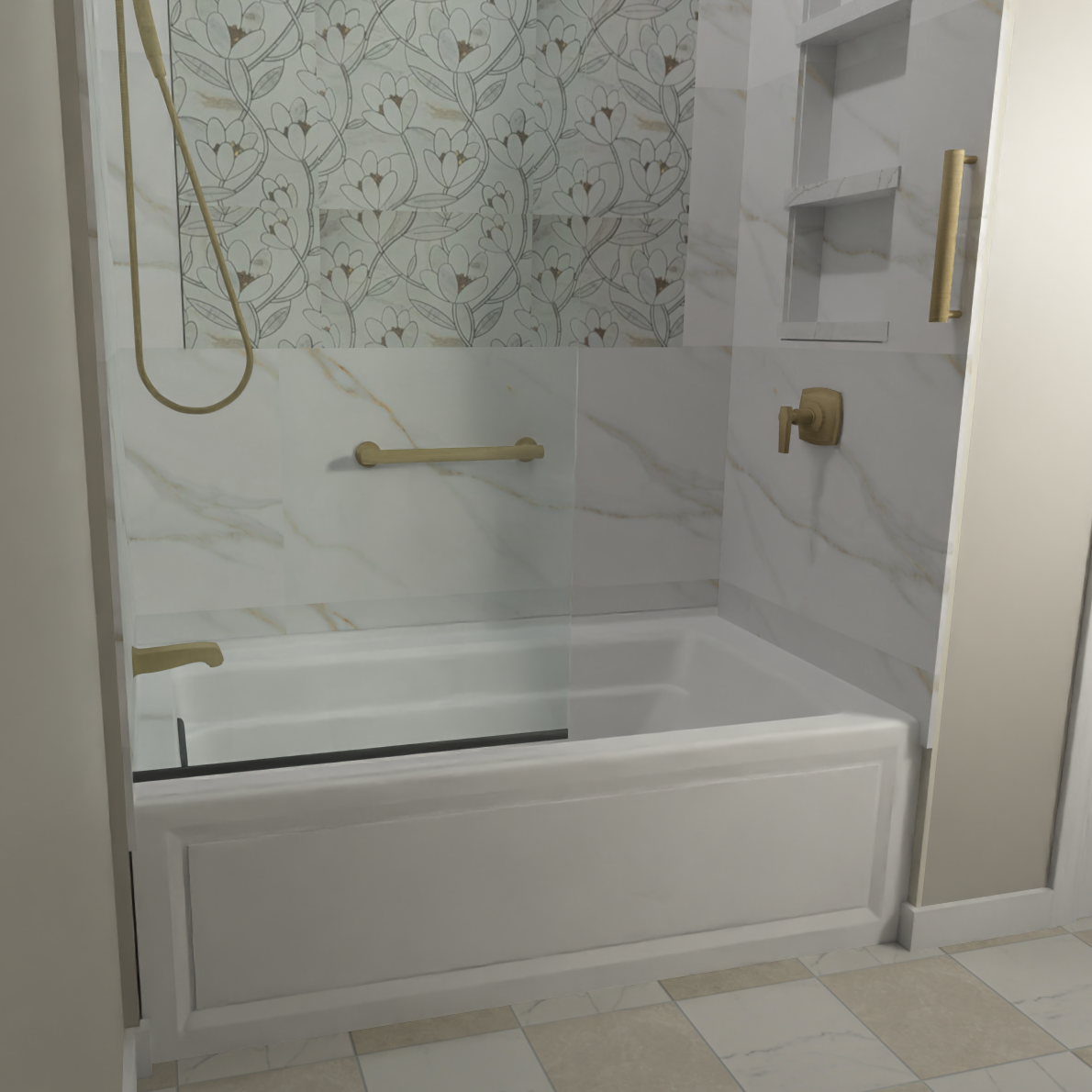
2. The Alcove Tub — The Practical Choice
The alcove tub sits between three walls with one open side. It's the most common tub configuration in American homes — and for good reason. It's efficient, functional, and when designed well, it can be genuinely beautiful.
It often gets dismissed as the "boring" option. That's a mistake.
The Pros:
Space efficiency. An alcove tub fits into a defined opening, which means it doesn't consume the floor plan the way a freestanding tub does. For bathrooms under 80 square feet, it's often the only tub option that makes sense.
Shower/tub combo capability. Because three walls surround it, an alcove tub is the natural choice for a combined shower/tub configuration. If you have children or simply prefer the option, this flexibility is valuable.
Most budget-friendly. Alcove tubs are the most straightforward to install from a plumbing and construction standpoint. Less complexity means lower labor costs.
Easiest to get in and out of. Lower sides, the option to add grab bars on any of the three walls, and a smaller footprint all make the alcove tub the most accessible option.
The Cons:
Less of a design statement. An alcove tub will never be the focal point of a bathroom the way a freestanding tub can be. If dramatic visual impact is the goal, this isn't your tub.
Three walls required. The placement flexibility of a freestanding tub doesn't exist here. You're working within a defined alcove, which limits your layout options.
Tile work matters more. Because the surround is so visible, the tile selection and installation quality on those three walls will define the look of the entire tub area. Budget accordingly.
Best for: Smaller bathrooms, family bathrooms, guest bathrooms, homeowners prioritizing function and budget, anyone planning a shower/tub combo.
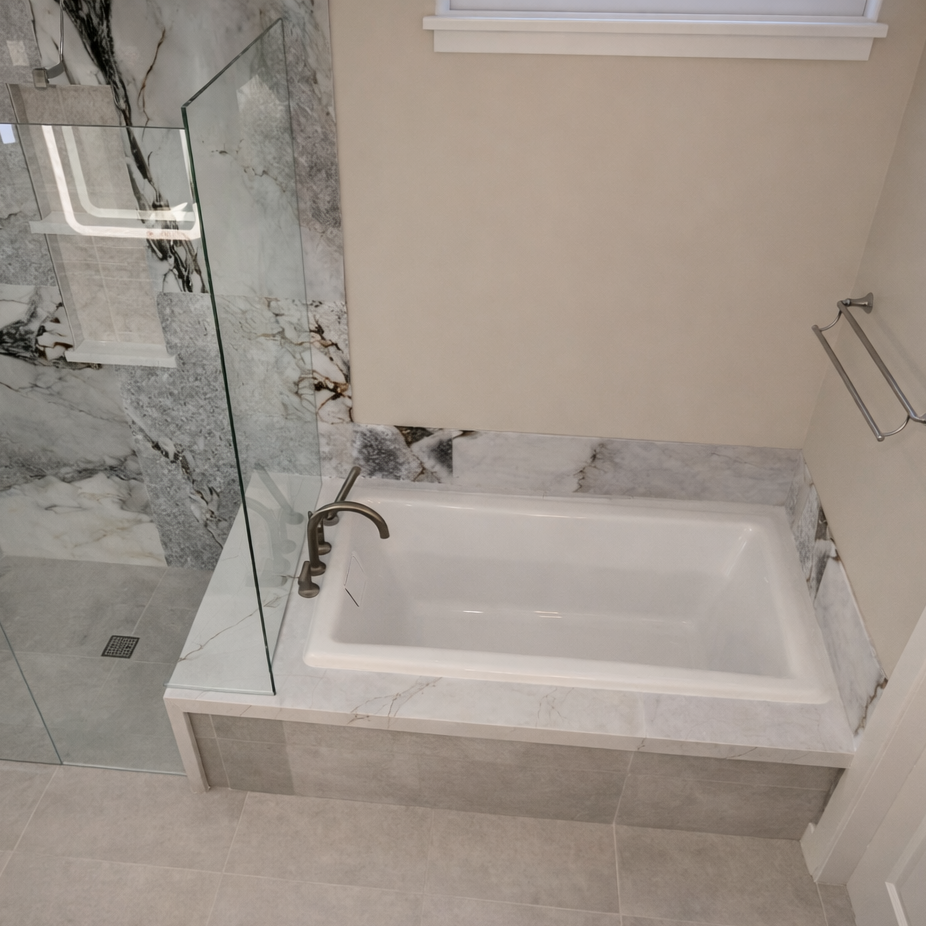
3. The Deck Mount Tub — The Elevated Classic
The deck mount tub is installed into a custom-built surround — a platform or deck of tile, stone, or another material that frames the tub and integrates it into the architecture of the room.
It's the choice that says "this bathroom was designed, not assembled."
The Pros:
Beautiful material integration. When the surround is built from the same marble, tile, or stone as the rest of the bathroom, the tub stops feeling like a fixture and starts feeling like part of the architecture. It's a cohesive, intentional look that photographs beautifully.
Faucet mounts to the deck. The deck itself becomes the faucet platform, which gives you flexibility in placement and eliminates the need for wall or floor plumbing in specific locations. This can actually simplify rough-in requirements.
Works where freestanding won't fit. A deck mount tub can achieve a high-end look in a bathroom where the square footage doesn't support a freestanding tub. The surround can be sized to fit the available space.
The Cons:
Construction cost is higher. Building a custom surround requires additional framing, waterproofing, tile work, and labor. This is not a budget option.
Less flexibility to change later. Once the surround is built and tiled, you're committed. Changing the tub or the layout is a significant undertaking.
Waterproofing is critical. The surround must be properly waterproofed during construction. This is an area where cutting corners leads to expensive water damage problems down the road. Verify your contractor's waterproofing approach before work begins.
Best for: Mid-to-large primary bathrooms, homeowners who want a built-in custom look, spaces where a freestanding tub won't fit but the budget supports custom construction.
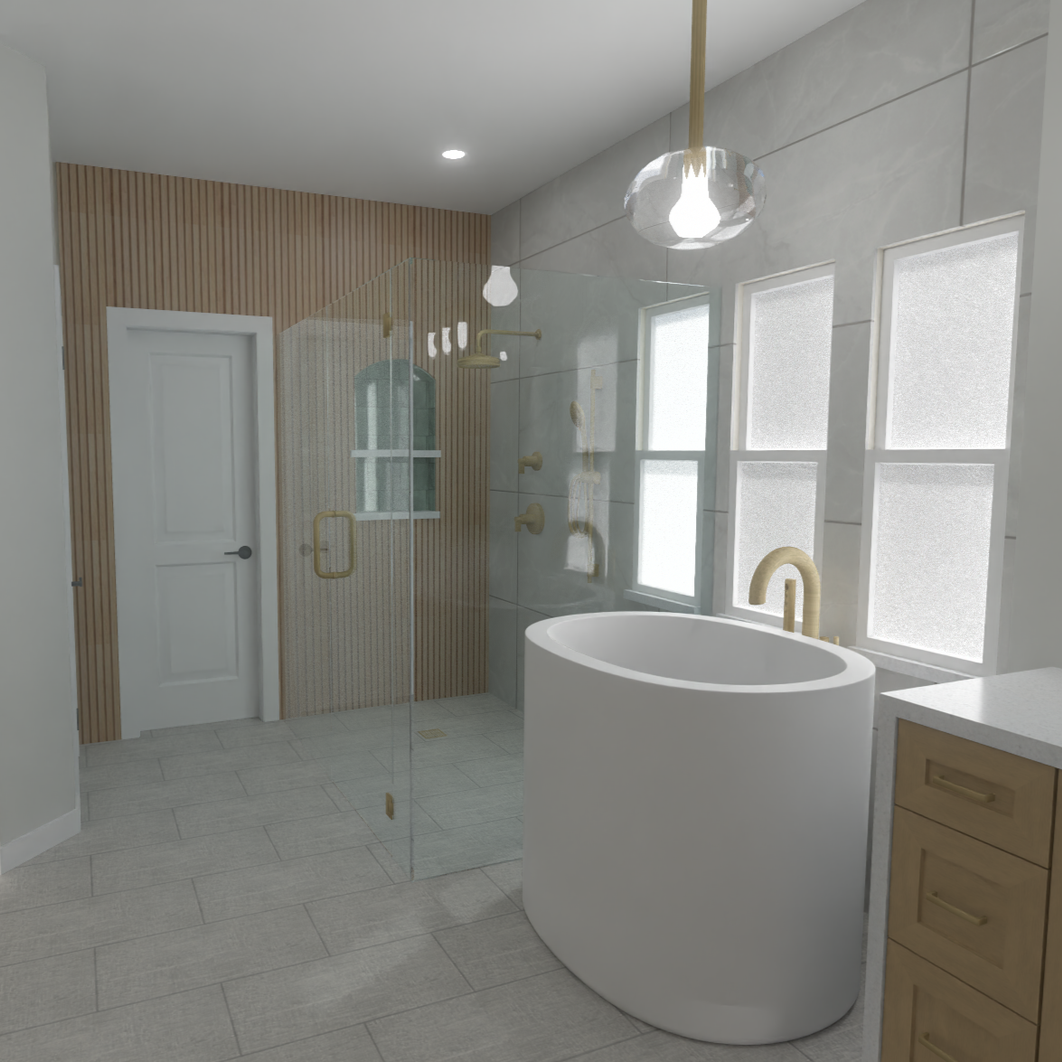
4. The Japanese Soaking Tub — The Unexpected Luxury
The Japanese soaking tub — also called an ofuro — is having a moment in American primary bathrooms. And once you understand what it actually offers, it's easy to see why.
Where a standard tub is designed for lying flat, a Japanese soaking tub is designed for sitting upright in deep, fully immersive water. The experience is completely different. Less spa treatment, more genuine restoration.
The round or oval form is compact and sculptural — and in the right bathroom, it's just as much of a showstopper as a traditional freestanding tub.
The Pros:
Smaller footprint, bigger experience. A Japanese soaking tub takes up significantly less floor space than a standard freestanding tub while delivering a deeper, more immersive soak. For bathrooms that want a tub statement without the square footage requirement of a traditional freestanding, this is the option most people don't know to consider.
A genuinely different bathing experience. If you actually want to USE your tub — not just look at it — the Japanese soaking tub delivers. The deep immersion, the upright posture, the full-body warmth. It's a ritual, not just a fixture.
Distinctive and design-forward. A Japanese soaking tub signals that the homeowner made a considered, intentional choice. It's rare enough to be a true differentiator and interesting enough to be a conversation piece. In a market where every primary bathroom has the same oval freestanding tub, this stands out.
Works beautifully with nature-inspired and spa design palettes. Natural wood vanities, zellige tile, organic textures, warm metals — the Japanese soaking tub is at home in all of them. It has a warmth and groundedness that some of the more sculptural freestanding tubs don't.
The Cons:
The entry and exit requires planning. Japanese soaking tubs have high sides and a deep drop. Getting in and out is a more deliberate process than a standard tub. For homeowners with mobility considerations or aging-in-place goals, this needs careful thought.
It's a different kind of bathing. If your vision of a bath involves lying back with a book and a glass of wine, the Japanese soaking tub may not be your match. It's designed for upright immersion, not reclined relaxation.
Water volume is significant. The depth that makes the experience so good also means more hot water to fill it. Confirm your water heater capacity before committing.
Less familiar to future buyers. If resale is a consideration in the next five to ten years, a Japanese soaking tub is a more niche choice than a standard freestanding or alcove. That doesn't make it wrong — but it's worth factoring in.
Best for: Homeowners who genuinely love bathing and want a functional, immersive experience. Spa-inspired and nature-forward design palettes. Bathrooms where the square footage doesn't support a standard freestanding tub but the design calls for something special. Clients who want to stand out from every other primary bathroom on the block.
The Detail Nobody Talks About: Faucet Placement
This is where bathroom remodels get expensive in ways homeowners don't anticipate.
Floor-mounted tub fillers are stunning. They're also one of the most expensive plumbing decisions you can make — not because of the fixture itself, but because of the rough-in requirements. Your plumber needs to know exactly where that freestanding floor supply will emerge before the concrete is poured or the subfloor goes down. Change your mind after that point and you're looking at significant demo and repair costs.
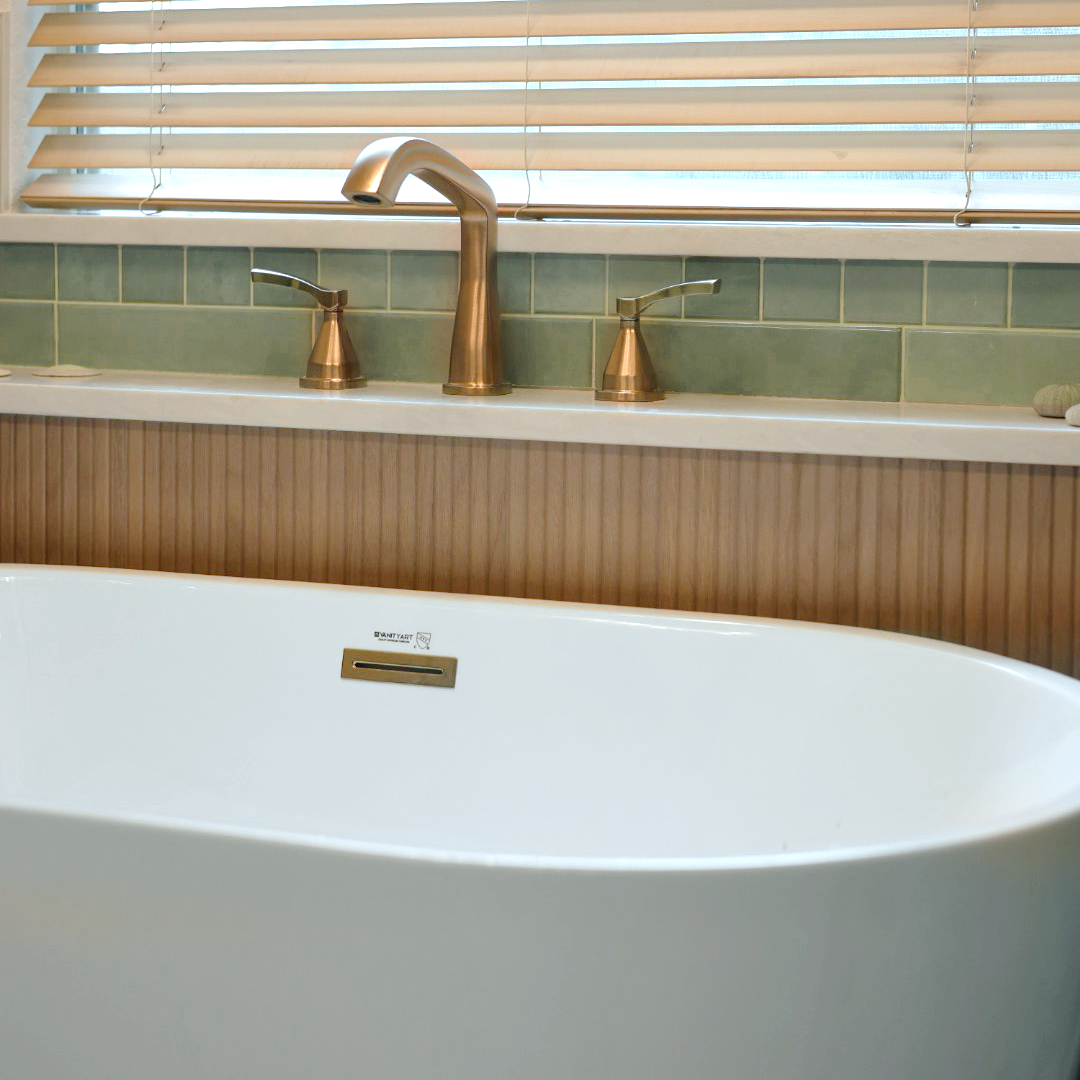
One solution we use frequently: design a ledge behind the freestanding tub.
A ledge — whether it's a built-in shelf, a partial wall, or an extension of the surround — accomplishes two things. It creates a functional surface for candles, bath products, and styling. And it provides a mounting location for a wall-mount or deck-mount faucet that gives your plumber flexibility in rough-in placement.
It looks intentional. It functions beautifully. And it can save you thousands in plumbing costs.
This is the kind of detail that gets worked out in the planning phase — ideally in a 3D rendering of your space before anything is built.
How To Choose The Right Tub For Your Space
Here are the questions we walk through with every client before making a tub recommendation:
1. What is the actual square footage of the bathroom? Not the approximate square footage. The actual dimensions, including door swings, vanity clearances, and toilet clearances. A freestanding tub that looks perfect in a 10x12 room on paper may leave no room to actually move around.
2. Where is the existing plumbing? Moving plumbing is always possible. It is never cheap. Understanding where your current supply and drain lines are located will significantly influence which tub type makes the most sense for your budget.
3. How do you actually use your bathroom? A couple with young children has different needs than a couple whose children have left home. A homeowner planning to age in place has different priorities than someone doing a quick renovation before selling. The tub that photographs best isn't always the tub that serves your life best.
4. What is the long-term plan for this home? If you're renovating to sell in five years, resale appeal matters. If this is your forever home, design for your life — not a hypothetical buyer's preferences.
5. What does the rest of the bathroom design support? A freestanding tub in a bathroom without sufficient natural light, without a strong feature wall behind it, and without appropriate ceiling height can look awkward rather than luxurious. The tub doesn't exist in isolation — it needs to be designed as part of the whole space.
Why We Render Before We Remodel
Every tub decision we make — freestanding, alcove, deck mount, or Japanese soaking — gets tested in a 3D rendering of the actual space before anything is ordered or built.
This isn't just about seeing what it will look like (though that matters enormously). It's about catching the problems before they become expensive mistakes.
The freestanding tub that's 6 inches too close to the vanity. The deck mount surround that blocks natural light from the window. The alcove that's 3 inches too short for the tub the client fell in love with.
These are problems that are free to fix on a computer screen. They are very expensive to fix mid-construction.
If you're planning a primary bathroom remodel and you haven't seen a 3D rendering of your space yet, that's where to start.
Ready To Start Planning Your Bathroom Remodel?
Whether you've already fallen in love with a freestanding tub or you're starting from scratch, the first step is understanding what your specific space will actually support.
That's exactly what we do.
We offer space planning and 3D rendering services for kitchen and bath remodels — so you can see your finished bathroom before demo day, make every decision with confidence, and build without regret.
GB+Design is a space planning and 3D rendering specialist serving Austin (locally) and remotely. We help homeowners renovate with confidence by visualizing their space before construction begins.